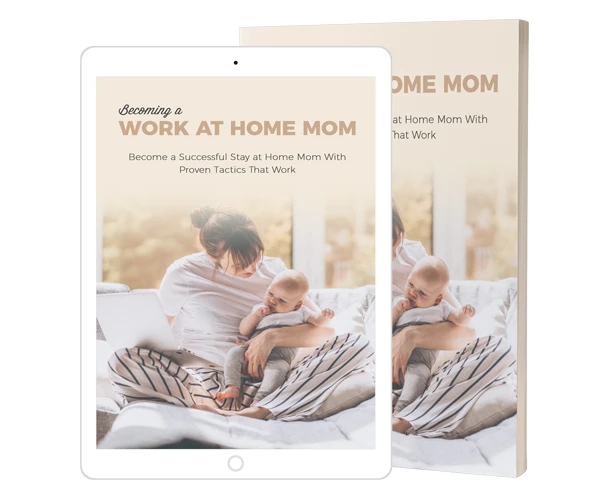
The Ultimate Guide to Transitioning into a Work-at-Home Mom
In today’s fast-paced digital economy, the traditional boundaries of the workplace have fundamentally shifted. No longer are professionals confined to standard corporate offices or rigid nine-to-five schedules.
Among those capitalizing most successfully on this professional evolution are mothers. The concept of the work-at-home mom (WAHM) has transformed from a niche lifestyle choice into a mainstream economic powerhouse.
For millions of women worldwide, balancing a rewarding professional career with the deep responsibilities of raising a family is no longer an elusive dream—it is a tangible, daily reality.
However, making the leap from a traditional workplace to a home office, or transitioning from a full-time stay-at-home parent to a working professional, requires more than just a laptop and an internet connection.
It demands meticulous planning, strategic career alignment, a psychological shift, and the implementation of robust organizational systems. This comprehensive guide serves as your blueprint to navigating the complex, yet incredibly rewarding, landscape of becoming a successful work-at-home mom.

Why Choose the Work-at-Home Mom Lifestyle?
The motivations behind choosing a work-at-home career path are as diverse as the mothers who pursue them. However, several universal benefits consistently emerge when analyzing why women choose to integrate their professional lives into their domestic spheres.
📖 Testimonials
– Beginner Mom Entrepreneur
“Starting as a work‑at‑home mom felt overwhelming. This guide gave me clear steps to organize my day and balance family with business. Within three months, I had my first paying clients.”
– Freelance Designer Mom
“I used the productivity tips from this guide to manage my design projects while caring for my toddler. My income doubled because I learned how to set boundaries and schedule effectively.”
– Tech‑Savvy Mom
“The section on digital tools was a game‑changer. I discovered apps that saved me hours each week. Now I can focus more on my kids without sacrificing my freelance work.”
– Mom Blogger
“I struggled to grow my blog until I applied the SEO strategies explained here. My traffic increased by 70% in six months, and I finally started earning from affiliate links.”
– Part‑Time Student Mom
“Balancing studies and motherhood was tough, but the mindset tips in this guide helped me stay motivated. I now manage my coursework and online side hustle without burning out.”
Unparalleled Professional and Personal Flexibility
The primary advantage of working from home is control over your schedule. Unlike traditional corporate structures where your time is dictated by a manager or a time clock, remote work and entrepreneurship allow you to build work hours around your family’s unique rhythm. Whether you need to accommodate school drop-offs, pediatric appointments, or a toddler’s nap schedule, a home-based career provides the agility required to meet these demands without sacrificing your professional output.
Significant Financial Advantages and Cost Savings
Transitioning to a home office yields immediate, measurable financial benefits. When you eliminate the daily commute, you drastically reduce expenditures on fuel, vehicle maintenance, and public transportation. Furthermore, the costs associated with a professional wardrobe, daily commercial lunches, and corporate coffee runs vanish. Most significantly, while many work-at-home moms still utilize partial childcare, the astronomical costs of full-time, institutional daycare can be heavily mitigated or completely eliminated through strategic scheduling.
Active Presence in Your Children’s Formative Years
For many mothers, the greatest return on investment is time. Being physically present to witness your child’s milestones, offer guidance, and provide a stable, nurturing environment during their formative years is invaluable. Working from home bridges the gap between financial necessity and the deeply held desire to be an active, deeply involved parent.
Identifying Your Profitable Work-at-Home Niche
Before launching your home-based career, you must assess your skills, passions, and market viability. The remote job market is highly competitive, and success requires aligning your unique talents with real-world demand. Let’s explore the primary avenues available to aspiring work-at-home moms.
High-Demand Remote Corporate Employment
If you prefer the stability of a steady paycheck, employer-provided health benefits, and a structured corporate hierarchy, remote employment is your ideal route. Many forward-thinking companies now operate on a fully remote or hybrid basis.
- Customer Experience and Support Specialist: Managing inquiries, resolving complaints, and assisting clients via phone, email, or live chat.
- Digital Marketing Coordinator: Overseeing social media campaigns, executing email marketing strategies, and analyzing web traffic data.
- Remote Human Resources and Recruiting: Sourcing talent, screening resumes, and conducting initial interviews via video conferencing.
- Data Entry and Administrative Operations: Maintaining corporate databases, organizing files, and streamlining digital workflows.
The Freelance Economy: Monetizing Existing Skills
Freelancing offers total autonomy over the clients you accept, the projects you pursue, and the rates you charge. This model is exceptionally well-suited for mothers who require maximum scheduling flexibility.
Freelance Writing and Content Strategy
Businesses across the globe are in constant need of high-quality copy. If you have a knack for words, you can find lucrative opportunities writing blog posts, whitepapers, website copy, sales letters, and email newsletters. As your portfolio grows, specializing in high-ticket niches like technology, finance, or healthcare can yield premium rates.
Graphic Design and Visual Branding
From designing logos and corporate brochures to creating social media graphics and user interfaces, visual artists are highly sought after. Mastery of tools like the Adobe Creative Suite, Canva, and Figma can quickly be translated into a steady stream of freelance design clients.
Virtual Assistance (VA)
As entrepreneurs and executives scale their businesses, they often outsource daily operational tasks. As a virtual assistant, your responsibilities may include managing executive calendars, filtering emails, booking travel arrangements, coordinating project timelines, or managing basic bookkeeping functions.
E-Commerce and Digital Product Entrepreneurship
For the creatively inclined or highly entrepreneurial mother, building a scalable business from scratch offers unlimited financial upside. E-commerce allows you to leverage digital storefronts to reach a global audience.
- Curated E-Commerce via Dropshipping: Selling physical products through platforms like Shopify or WooCommerce without ever holding, managing, or shipping inventory yourself.
- Digital Products and Printables: Designing educational worksheets, planners, budget trackers, or resumes to sell passively on platforms like Etsy.
- Blogging and Affiliate Marketing: Building a content-rich website around a specific passion—such as parenting, nutrition, or personal finance—and monetizing it through display advertisements and affiliate product recommendations.
Setting Up Your Physical and Digital Home Infrastructure
To function effectively as a professional, you must create an environment that minimizes distractions, promotes physical health, and maximizes your operational efficiency. Treating your home business or remote job with strict professionalism begins with your physical environment.
Designing a Dedicated, Ergonomic Workspace
Working from your bed or the kitchen table might be sustainable for a few days, but it is a recipe for long-term physical discomfort and mental burnout. If space allows, dedicate a specific room with a closing door to serve as your formal office. If space is constrained, claim a quiet corner of a bedroom or living space solely for work purposes.
Invest in an ergonomic chair that properly supports your posture through long hours of focused labor. Ensure your desk is at an appropriate height, and position your monitor at eye level to prevent neck strain. This dedicated zone creates a crucial psychological boundary: when you are in this space, you are at work; when you step away, you are home.
Hardware and Software Essentials for Remote Work
Your business is only as reliable as the technology supporting it. Do not let outdated hardware impede your professional reputation. Ensure your home setup includes the following foundational elements:
| Category | Essential Component | Primary Business Purpose |
|---|---|---|
| Hardware | High-Speed Fiber Internet | Ensures uninterrupted video conferencing, rapid file transfers, and seamless cloud connectivity. |
| Hardware | Dual Monitors & Noise-Canceling Headset | Improves multi-tasking efficiency and blocks background domestic noise during client calls. |
| Software | Cloud Storage & Security (VPN) | Safeguards sensitive client information while ensuring access to files from any device. |
| Software | Project Management Apps (Asana/Trello) | Keeps tasks organized, tracks deadlines, and facilitates collaboration with remote teams. |
Mastering Time Management, Productivity, and Flow State
The single greatest challenge voiced by work-at-home mothers is the constant, overlapping friction between professional duties and domestic needs. Without rigorous time management and strict boundaries, you will find yourself working poorly while parenting distractedly. The key is to implement advanced productivity frameworks customized for parental life.
The Strategy of Time Blocking and Theme Days
Abandon the traditional, linear to-do list, which often causes decision paralysis. Instead, adopt the practice of time blocking. Divide your day into dedicated compartments assigned to specific tasks. For example, assign 5:00 AM to 7:00 AM (before the children wake) to high-focus, deep-work tasks like writing or strategic planning. Dedicate mid-day blocks to low-focus administrative work, and save evening blocks for client communications or professional development.
Additionally, consider implementing “Theme Days” for your business operations. Designate Mondays for marketing and outreach, Tuesdays and Wednesdays for client fulfillment, Thursdays for administrative duties and invoicing, and Fridays for review and strategy. This structural consistency reduces cognitive load and prevents multitasking burnout.
Capitalizing on “The Naptime Hustle” and Micro-Pockets of Time
For mothers of toddlers and infants, productivity must be fluid. Successful WAHMs master the art of utilizing micro-pockets of time. A 45-minute afternoon nap window is not the time to scroll social media; it is a highly focused sprint to execute pre-planned, bite-sized tasks. Keep a running list of “15-minute tasks” (such as responding to a specific email, updating a social media post, or checking an invoice) so that whenever an unexpected window of quiet opens, you can immediately execute without wasting time wondering what to do.
Establishing Strict Boundaries with Family and Clients
It is imperative to train your family to respect your working hours. For older children, utilize visual cues. A closed door, or a specific colored sign hung on your office handle, can signal that mom is on an important call and should not be disturbed unless there is an emergency. Conversely, you must set clear boundaries with clients. Clearly state your working hours in your email signature and onboarding documents. Avoid responding to late-night client messages, as this establishes an unsustainable expectation of 24/7 availability.
The Childcare Dilemma: Navigating Parenting While Working
Let us address an industry myth: it is nearly impossible to work full-time at peak efficiency while simultaneously providing undivided, high-quality care to infants or highly active toddlers all day long. Attempting to do so often leads to profound exhaustion. Strategic work-at-home moms utilize a hybrid spectrum of childcare solutions.
Developing a Structured Daily Routine for Children
Children thrive on predictability. By establishing a rigid routine for meals, naps, structured play, and independent activities, you can accurately predict when your windows of deep focus will occur. Designate safe, designated play zones within or immediately adjacent to your workspace, allowing you to supervise independent play while completing non-cognitive professional tasks.
Leveraging Community, Exchanges, and Part-Time Support
You do not have to do this entirely alone. Consider forming a “childcare swap” with another trusted work-at-home mom in your neighborhood. You watch all the children on Tuesdays and Thursdays while she works, and she takes them on Wednesdays and Fridays so you can dive uninterrupted into your business. Alternatively, hiring a local high school or college student as a mother’s helper for a few hours a week can provide you with low-cost, focused work blocks while you remain on the premises.
Overcoming the Psychological Challenges: Isolation and Mom Guilt
The emotional landscape of a work-at-home mom can be surprisingly complex. While you escape corporate politics, you often trade them for professional isolation. Simultaneously, being physically present but mentally occupied can trigger intense feelings of “mom guilt.” Protecting your mental health is paramount to your long-term success.
Combating Professional and Social Isolation
Human beings are inherently social creatures. Spending days on end communicating only through text-based digital platforms and speaking to toddlers can rapidly degrade your mental well-being. Actively combat this by cultivating a digital and physical community.
- Join localized or niche-specific Facebook, LinkedIn, or Slack communities dedicated to work-at-home mothers.
- Schedule regular working sessions at local coffee shops, libraries, or co-working spaces to surround yourself with professional energy.
- Commit to at least one weekly social engagement completely detached from both your work and your children, such as a fitness class, a book club, or dinner with friends.
Deconstructing Mom Guilt and Embracing Integration
Mom guilt stems from the unrealistic expectation that you must be a flawless, full-time stay-at-home mom and a hyper-focused, corporate executive at the exact same time. Give yourself grace. Understand that by working, you are providing financial security, demonstrating resilience, modeling a strong work ethic, and showing your children that women can be multi-faceted, successful individuals. Shift your perspective from attempting to achieve a perfect “work-life balance” to practicing dynamic “work-life integration.”
Financial Literacy, Taxes, and Legal Compliance for Home Businesses
Transitioning into a work-at-home mom career, particularly through freelancing or entrepreneurship, brings new financial and legal responsibilities. Failing to properly organize your business infrastructure can result in stressful tax liabilities or legal complications down the line.
Separating Personal and Business Finances
The moment you earn your first dollar as an independent professional, open a dedicated business bank account and secure a business credit card. Never mix personal family expenses with business transactions. This absolute separation simplifies your accounting processes, ensures accurate tracking of your profitability, and protects you during potential tax audits.
Understanding Tax Write-Offs and Deductions
One of the most lucrative benefits of operating a business out of your home is the ability to leverage legitimate tax deductions. Consult with a certified public accountant (CPA) to ensure you are maximizing your tax returns. Common deductible business expenses include:
- The Home Office Deduction: Deducting a percentage of your rent, mortgage interest, utilities, and homeowners insurance based on the square footage of your dedicated workspace.
- Hardware and Software Subscriptions: The cost of your computer, office furniture, internet connectivity, and monthly software platforms used for business fulfillment.
- Professional Services and Marketing: Fees paid for advertising, web hosting, educational courses, legal advice, and accounting assistance.
Your Step-by-Step Transition Checklist
Ready to embark on your journey toward becoming a thriving work-at-home mom? Follow this structured operational roadmap to ensure a smooth, secure, and highly successful transition.
Phase 1: Foundation and Discovery
Conduct a meticulous skills inventory. List your professional history, technical proficiencies, and creative passions. Determine your target niche and decide whether corporate remote employment, freelance client work, or e-commerce fits your lifestyle goals. Calculate your minimum monthly financial requirements to understand your income targets.
Phase 2: Operational Infrastructure
Clear out a dedicated space in your home and outfit it with ergonomic furniture, a reliable computer, and high-speed internet infrastructure. Acquire any specialized software or tools required for your chosen field. Set up your corporate entity, business banking accounts, and invoicing systems.
Phase 3: Network Building and Launch
Optimize your professional digital footprint. Update your LinkedIn profile, create a clean portfolio website showcasing your capabilities, and begin reaching out to your professional network. Apply to remote positions, pitch freelance clients, or launch your digital storefront. Establish your initial daily routine and test your childcare strategies.
Phase 4: Continuous Optimization
Review your productivity workflows every month. Assess what is working, adjust your time blocks as your children grow and their routines change, and continuously refine your boundaries. Reinvest a portion of your profits into professional development courses to upgrade your skillset and command higher rates over time.
Embrace Your New Paradigm of Freedom
Becoming a work-at-home mom is not an overnight lifestyle hack; it is a profound journey of self-determination, structural discipline, and intentional living. It challenges you to stretch your capabilities, master organizational frameworks, and shatter societal expectations of what motherhood and career success should look like.
By defining your niche, designing an optimized environment, applying strict productivity strategies, and protecting your mental well-being, you can build a sustainable, lucrative career that honors both your professional ambitions and your deepest maternal devotion. The future of work is digital, flexible, and empowering. Step boldly into your home office, take control of your time, and design a life that truly allows you to thrive in both your career and your home.
Download Ebook Work AT Home Mom