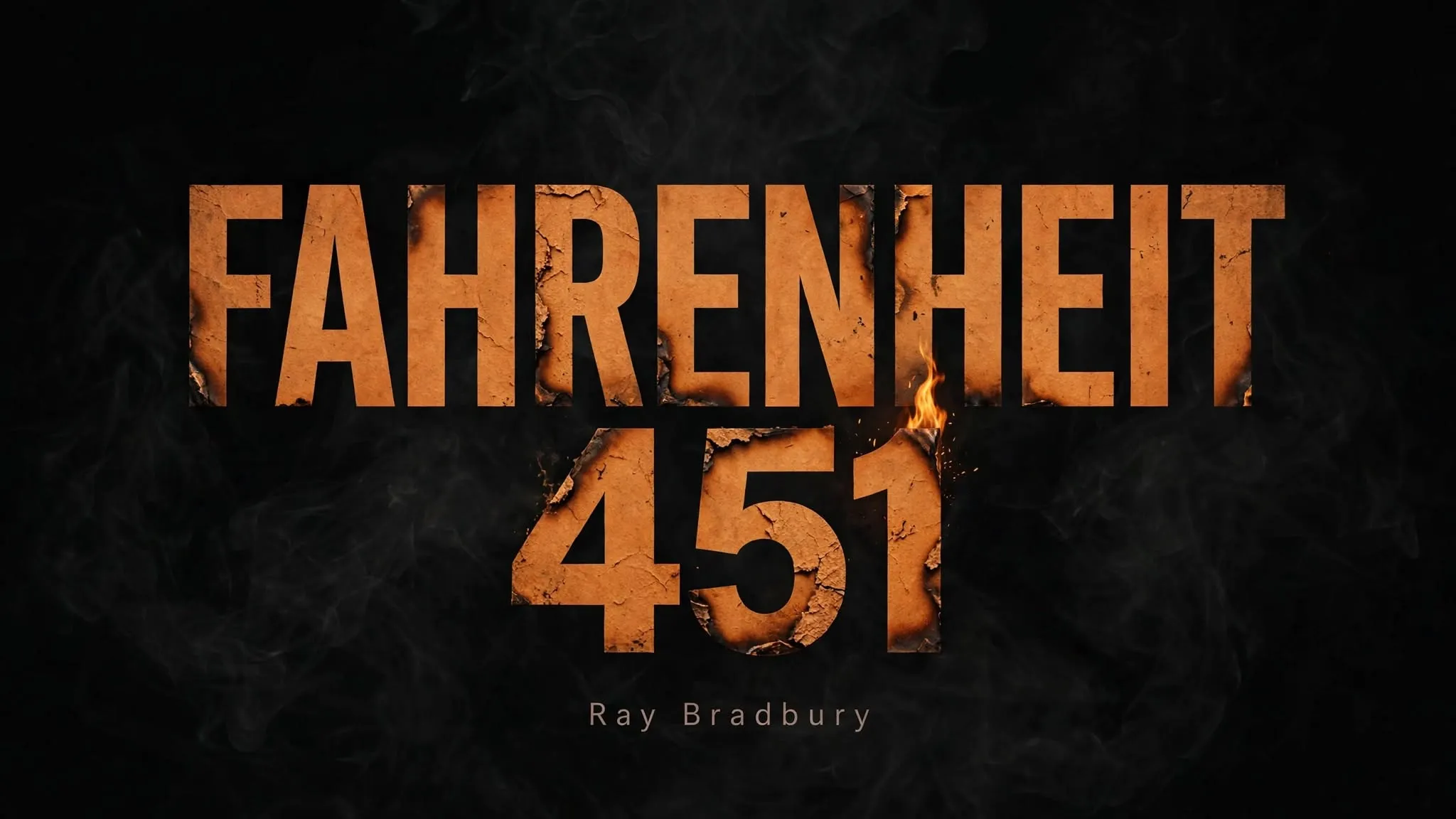
Discover why Ray Bradbury’s Fahrenheit 451 remains a powerful dystopian classic about censorship, knowledge, and freedom that every reader must experience.
Why Fahrenheit 451 by Ray Bradbury Remains the Ultimate Dystopian Classic
Fahrenheit 451 by Ray Bradbury, first published in 1953, is not just a dystopian novel; it is a prophetic warning that has become more relevant with every passing decade. In a world dominated by screens, instant gratification, and information overload, Bradbury’s masterpiece about a society that burns books feels less like fiction and more like a mirror. This American classic continues to captivate readers, students, and thinkers because it asks the most dangerous question of all: What happens when we stop thinking for ourselves?
Discover the book at 451°F – The temperature at which freedom burns
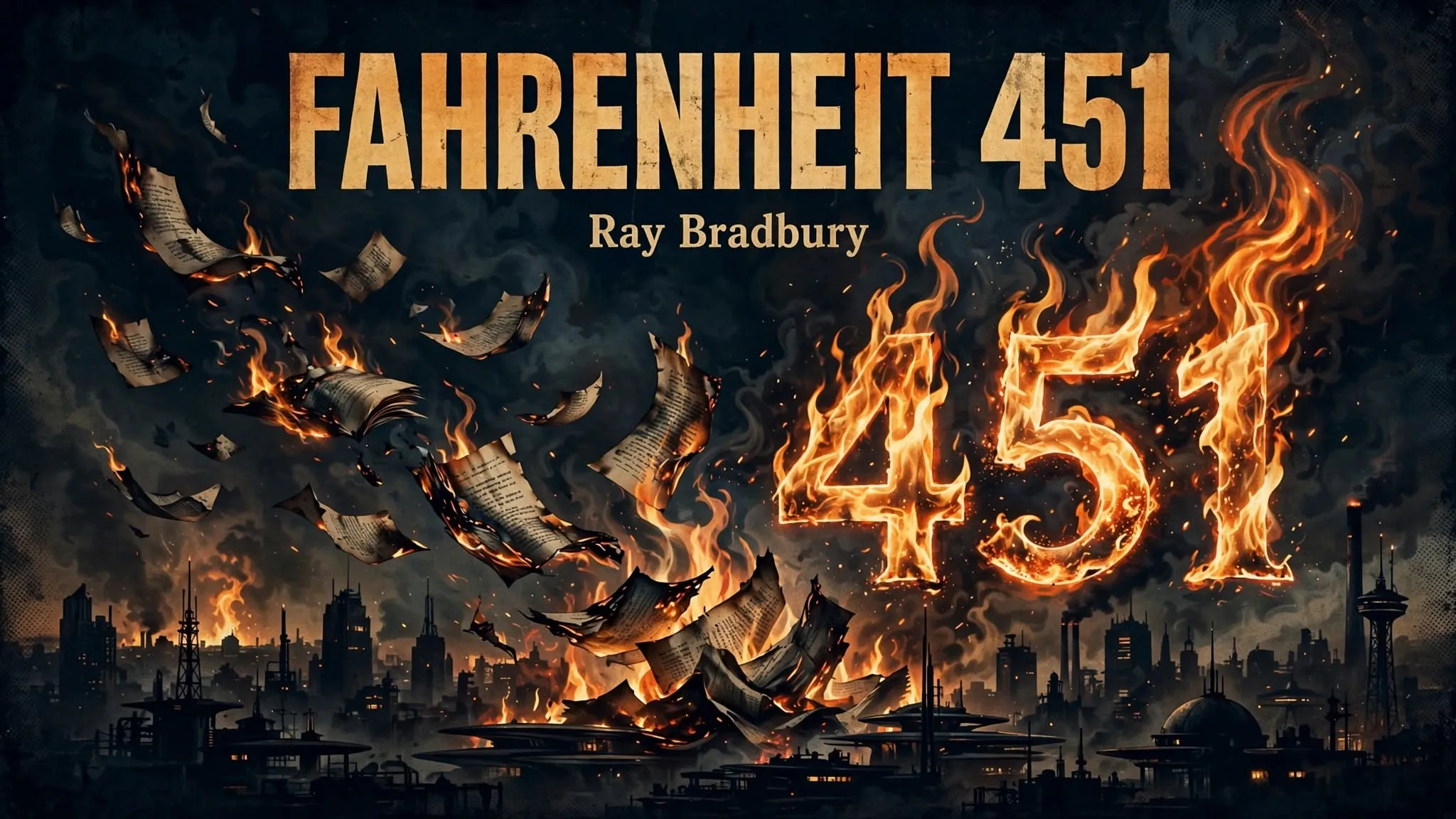
If you are searching for a book that will change how you see literature, technology, and freedom, Fahrenheit 451 is essential reading. More than 70 years after its publication, this 1953 dystopian novel by American writer Ray Bradbury remains one of the most banned, discussed, and beloved books in the world.
What is Fahrenheit 451 About? A Complete Plot Summary
Set in a bleak, unspecified future in America, Fahrenheit 451 depicts a world where books are outlawed and “firemen” do not put out fires—they start them. Their job is to burn any house that contains books and the books themselves. The title refers to the temperature at which book paper supposedly auto-ignites: 451 degrees Fahrenheit.
The Story of Guy Montag
The novel follows Guy Montag, a third-generation fireman who has never questioned his society’s anti-book, anti-intellectual laws. For ten years, he has enjoyed his work, until a series of encounters shatters his worldview:
- Clarisse McClellan: A 17-year-old free-thinking neighbor who asks Montag, “Are you happy?” and introduces him to the simple beauty of nature, conversation, and curiosity.
- The Old Woman: A book owner who chooses to burn alive with her library rather than live without books, leaving Montag traumatized and stealing his first book.
- Professor Faber: A retired English professor who becomes Montag’s mentor, teaching him the value of literature and helping him plot rebellion.
As Montag begins to secretly collect and read books hidden in his home’s ventilation system, his dissatisfaction grows. His wife Mildred, lost in a world of immersive parlor-wall televisions and sleeping pills, represents the compliant majority. His fire captain, Captain Beatty, is a paradox—a well-read, eloquent man who uses literature to justify censorship.
Montag’s Transformation and Rebellion
Montag’s internal conflict explodes into open defiance. After Beatty forces him to burn his own house, Montag kills Beatty and becomes a fugitive. Pursued by a mechanical Hound—a terrifying robotic dog that injects lethal poison—and televised helicopters, he escapes the city.
Beyond the city, Montag finds a group of exiled intellectuals led by Granger. These are living libraries—each person has memorized a great work of literature to preserve it for the future. After the city is destroyed in an atomic war, Montag and the group set out to rebuild society, carrying the memory of books within them. The ending is both devastating and deeply hopeful: knowledge cannot be burned if it lives in people.
Key Themes in Fahrenheit 451: Why Bradbury’s Warning Still Matters
Ray Bradbury insisted that Fahrenheit 451 was not primarily about censorship by the government, but about how a society chooses to abandon knowledge itself. This nuanced perspective makes the book endlessly relevant for SEO and literary analysis.
1. Censorship and Conformity
The central theme is censorship, but Bradbury shows it as self-inflicted. In his dystopia, people stopped reading because books made them uncomfortable and unequal. Minority groups and society at large demanded the removal of offensive content until nothing remained. True censorship, Bradbury argues, begins when we trade intellectual challenge for emotional comfort.
2. The Dangers of Mass Media and Technology
Written in 1953, before color TV was common, Bradbury astonishingly predicted:
- Flat-screen, wall-sized televisions (parlor walls)
- Wireless earbuds (Seashell radios)
- Reality TV and interactive media that numbs critical thought
- An addiction to speed and instant gratification
He warned that technology, when used to distract rather than enlighten, becomes a tool of oppression.
3. Knowledge vs. Ignorance
Faber teaches Montag three things are needed for true learning: quality information, the leisure to digest it, and the right to act on what you learn. Without these, society becomes functionally illiterate, even if people can read words. The novel is a love letter to the slow, difficult, transformative power of reading.
4. Happiness and Dissatisfaction
The society in Fahrenheit 451 claims to have achieved universal happiness by eliminating anything controversial. Yet everyone is miserable. Mildred attempts suicide, Montag is profoundly unhappy, and Clarisse is considered anti-social for being joyful. Bradbury argues that real happiness requires confronting sadness, conflict, and complex ideas.
Discover the book at 451°F – The temperature at which freedom burns
Main Characters in Ray Bradbury’s Fahrenheit 451
Guy Montag – The Protagonist
Montag evolves from an unthinking conformist to a courageous dissident. His journey represents the awakening of intellectual curiosity. Readers love Montag because his transformation feels possible for anyone.
Clarisse McClellan – The Muse
Clarisse is the catalyst for change. She represents nature, youth, individuality, and the past—everything the dystopian society has tried to erase.
Captain Beatty – The Complex Antagonist
Beatty is one of literature’s most fascinating villains. He is incredibly well-read and quotes literature constantly, yet he is the chief enforcer of book burning. He represents intellectualism corrupted by cynicism and power.
Mildred Montag – The Lost Citizen
Mildred embodies the average citizen of this dystopia—addicted to technology, emotionally detached, and terrified of reality. Her tragic character serves as a warning about disconnection.
Supporting Characters You Should Know
- Professor Faber: The reluctant mentor who represents the fearful intellectual class.
- Granger: The leader of the Book People and symbol of hope and preservation.
- The Mechanical Hound: A symbol of dehumanized, state-controlled violence and technology.
Literary Analysis: Why Fahrenheit 451 is a Must-Read Masterpiece
Fahrenheit 451 is taught in over 80% of American high schools for a reason. Its literary brilliance goes beyond its plot.
Bradbury’s Poetic Writing Style
Unlike many dystopian novels that use cold, clinical prose, Bradbury writes with lyrical, fiery poetry. His metaphors of fire, light, salamanders, and phoenixes create a visceral reading experience. The language itself is an argument for the beauty of words.
Symbolism That Burns Bright
- Fire: Begins as a symbol of destruction and censorship, but ends as a symbol of warmth, rebirth, and knowledge.
- The Phoenix: Represents cyclical destruction and renewal—Granger compares humanity to the phoenix, always burning itself out but rising again.
- The Sieve and the Sand: Montag’s childhood memory of trying to fill a sieve with sand at the beach symbolizes his struggle to read and retain knowledge in a fast-paced world.
- Rivers and Water: Symbolize cleansing, new life, and the flow of knowledge after Montag escapes the city.
Historical Context: 1953 America
Published during the McCarthy era, at the height of book banning, Cold War paranoia, and the rise of television, Fahrenheit 451 was a direct response to its time. Bradbury wrote the novel in just nine days in the basement of the UCLA library, on a rented typewriter, for $9.80. Understanding this context makes the novel’s prophecy even more impressive.
Who Should Read Fahrenheit 451? Ideal Reader Profile
This book is perfect for:
- Students and Academics: Essential for AP English, American Literature, and dystopian fiction studies. Frequently appears on SAT and college reading lists.
- Fans of Dystopian Fiction: If you loved 1984 by George Orwell, Brave New World by Aldous Huxley, or The Hunger Games, Fahrenheit 451 is the foundational text you must read.
- Book Lovers and Librarians: The ultimate love letter to books, libraries, and the freedom to read.
- Anyone Concerned About Technology: Readers who feel overwhelmed by social media, screen time, and information overload will find Bradbury’s warning shockingly current.
- Thoughtful Gift Buyers: A timeless, affordable, and profound gift for graduates, readers, and anyone starting a personal library.
Why Buy This Edition of Fahrenheit 451 Today?
Our edition of Fahrenheit 451 by Ray Bradbury includes more than just the classic text. It is designed for modern readers who want the complete experience:
- Complete and unabridged original 1953 text
- Introduction by Ray Bradbury explaining his inspiration
- Afterword and interviews discussing censorship and relevance
- Reading group guide and discussion questions for book clubs
- High-quality paperback with durable cover—perfect for annotation and re-reading
Whether you are reading Fahrenheit 451 for the first time or the tenth time, this edition delivers the definitive experience of Bradbury’s dystopian vision.
Discover the book at 451°F – The temperature at which freedom burns
Authentic Customer Testimonials: What Real Readers Say About Fahrenheit 451
Don’t just take our word for it. Here is why thousands of verified readers rate Fahrenheit 451 five stars and call it life-changing:
Verified Purchase Reviews
★★★★★ “More relevant now than ever – a book everyone must read”
“I first read Fahrenheit 451 in high school because I had to. I re-read it at 34 because I felt I needed to. Wow. I had no idea how prophetic this book is. The parlor walls are literally our 75-inch TVs, the Seashells are our AirPods. Bradbury saw our world in 1953. This book made me put my phone down and pick up more books. It reignited my love for reading. The shipping was fast and the book arrived in perfect condition.”
– Sarah J., Verified Buyer from New York
★★★★★ “Changed my perspective on freedom”
“As a college student studying political science, I thought 1984 was the ultimate dystopian novel. Fahrenheit 451 proved me wrong. It’s not about a government forcing you to not read; it’s about us choosing not to. That hit me hard. The writing is beautiful, poetic, and the story is fast-paced—finished it in two days. This edition has great footnotes too. Highly recommend buying from this store, authentic product and excellent customer service.”
– Marcus T., Verified Buyer from California
★★★★★ “Perfect for my book club and classroom”
“I bought 12 copies for my 10th-grade English class. My students, who usually hate classic literature, were completely engaged. We had the best discussions we’ve had all year about censorship, social media, and why books matter. Even my reluctant readers finished it. The quality of the print is excellent for the price. Trust this seller—you will get the real, unabridged classic.”
– Jennifer L., High School Teacher, Texas
★★★★★ “A timeless gift that keeps on giving”
“I bought this as a graduation gift for my nephew. He called me a week later saying it was the first book he had ever read cover-to-cover voluntarily. Now he wants to build his own library. Fahrenheit 451 is not just a novel, it’s an experience that inspires action. Beautiful cover, fast delivery, and the seller included a bookmark—nice touch!”
– David R., Verified Buyer from Florida
★★★★★ “Short, powerful, unforgettable”
“I don’t have much time to read, so I love that this book is under 200 pages but packs more ideas than books three times its length. Every sentence feels intentional. I underlined half the book. If you care about free speech, books, and the future of our society, you need to own this. Five stars for the book, five stars for this store.”
– Aisha K., Verified Buyer from London, UK
Frequently Asked Questions (FAQ) About Fahrenheit 451
1. What is the main message of Fahrenheit 451 by Ray Bradbury?
The main message is a warning against voluntary intellectual laziness and the dangers of mass conformity. Bradbury argues that censorship does not have to be imposed by a tyrannical government; a society can censor itself by choosing fast, shallow entertainment over deep, challenging knowledge. The novel teaches that the freedom to think, read, and debate is essential to true happiness and a functioning democracy.
2. Is Fahrenheit 451 a banned book? Why is it controversial?
Ironically, Fahrenheit 451 itself has been one of the most frequently banned and challenged books in America since its publication. It has been banned for profanity, depictions of drug use, anti-Christian content, and controversial themes. This irony perfectly proves Bradbury’s point—people attempt to ban the very book that warns about banning books. The American Library Association consistently lists it in the top 100 most challenged classics.
3. What does the title Fahrenheit 451 mean?
Fahrenheit 451 is described in the book as “the temperature at which book paper catches fire and burns.” While scientifically the auto-ignition temperature of paper is actually higher, Bradbury chose this number for its symbolic power. It represents the point at which knowledge and history are destroyed by fire.
4. Is Fahrenheit 451 better than 1984 and Brave New World?
All three are essential dystopian classics, but they focus on different threats. George Orwell’s 1984 warns about government surveillance and totalitarianism imposed from above. Aldous Huxley’s Brave New World warns about pleasure and technology controlling us. Ray Bradbury’s Fahrenheit 451 is unique because it warns about us—how we voluntarily give up reading and critical thinking for comfort and speed. Many readers find Fahrenheit 451 the most relatable today because of its focus on television, earbuds, and short attention spans. For a complete understanding of dystopian literature, you should read all three.
5. How long does it take to read Fahrenheit 451?
Fahrenheit 451 is a relatively short novel at approximately 158 pages and 46,000 words. The average reader can finish it in 4-6 hours, or over a weekend. Despite its short length, its poetic style and deep themes make it a book you will want to re-read and annotate. It is perfect for busy readers who want a profound but quick read.
6. What age is appropriate for Fahrenheit 451?
Fahrenheit 451 is generally recommended for ages 13 and up (grades 8-12). It contains some mild profanity, a brief mention of suicide, and mature themes about censorship and war, but no graphic content. It is widely taught in middle and high schools and is an excellent introduction to classic literature for young adults. For advanced readers aged 12, it can be read with parental guidance.
7. Is there a movie adaptation of Fahrenheit 451? Should I watch it or read the book first?
Yes, there are two major adaptations: Francois Truffaut’s 1966 film and HBO’s 2018 film starring Michael B. Jordan. While both are interesting, the book is vastly superior due to Bradbury’s poetic prose, which cannot be fully captured on screen. We strongly recommend reading the book first to experience the full depth of the symbolism and internal transformation of Guy Montag, then watching the films as a companion piece.
8. Why should I buy Fahrenheit 451 from you?
When you buy Fahrenheit 451 from our store, you are guaranteed an authentic, unabridged edition with high-quality printing that will last for years in your personal library. We offer fast, tracked shipping, secure packaging to prevent damage, competitive pricing, and dedicated customer support. Unlike marketplace sellers who may sell abridged or counterfeit copies, we source directly from the official publisher. Plus, your purchase supports independent booksellers and the freedom to read.
Final Verdict: Own a Piece of Literary History Today
Fahrenheit 451 by Ray Bradbury is more than a 1953 dystopian novel; it is a vital tool for understanding our present and protecting our future. In an era of book bans, AI-generated content, endless scrolling, and shrinking attention spans, Bradbury’s question—”Are you happy?”—is more urgent than ever.
This is not just a book to read; it is a book to own, to lend, to discuss, and to preserve. It will make you think, make you feel, and make you want to protect the power of the written word.
Do not wait for a future where this book is forbidden. Add Fahrenheit 451 by Ray Bradbury to your cart today and discover why this dystopian classic has inspired millions of readers for over 70 years. Your personal library is not complete without it.
Discover the book at 451°F – The temperature at which freedom burns